
Garage and Workshop Floor Screed in Nottingham

Durable Floor Screeding for Heavy-Duty Applications
Garage and workshop floors endure punishment that domestic floors never face: vehicle weight concentrated on small tyre contact patches, dropped tools, oil and chemical spills, temperature fluctuations, and the general wear from years of hard use. A properly screeded garage floor provides the robust, level foundation essential for these demanding environments, whilst a poorly executed floor develops surface dusting, cracking, and deterioration that compromises both function and appearance.
At Flooring Nottingham, we provide specialist
floorscreeding for garages and workshops throughout Nottingham, West Bridgford, Beeston, Long Eaton, and surrounding areas. Our garage screeding service creates the durable substrate required for long-term performance, whether you're finishing with paint, epoxy resin coatings, or planning to install
floor tiles or other coverings.
Why Garage Floors Need Professional Screeding
Many garages and workshops have concrete ground slabs that were poured years or decades ago, often with minimal attention to surface finish. These original slabs frequently suffer from unevenness, surface crazing, dusting concrete, or slopes that send water flowing in unwanted directions. Oil and other chemicals have often penetrated the surface, weakening the concrete and making it impossible to achieve proper adhesion for coatings or floor coverings.
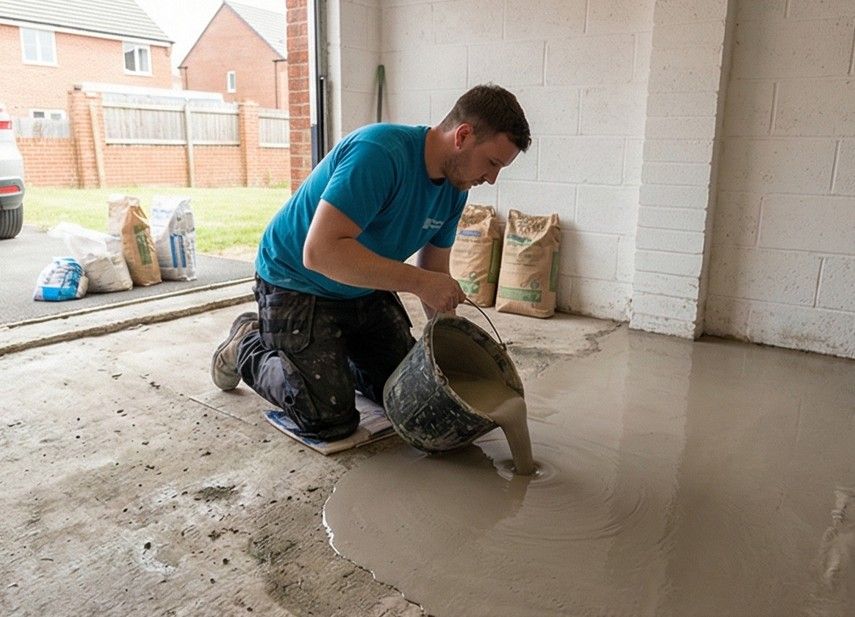
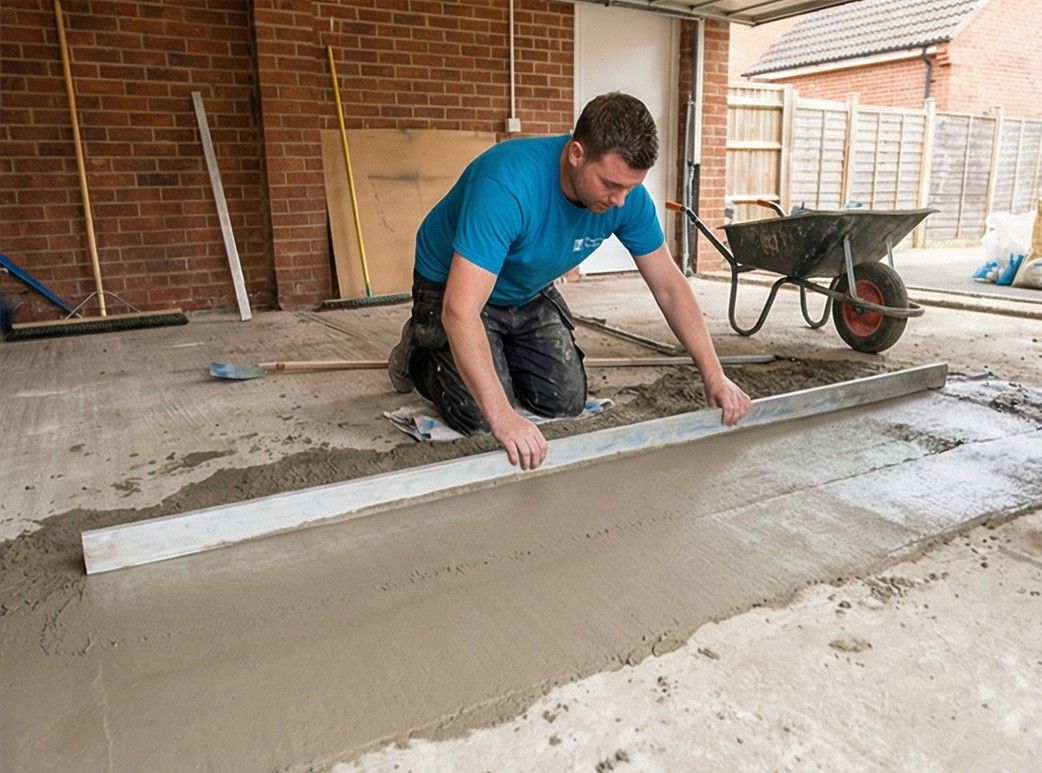
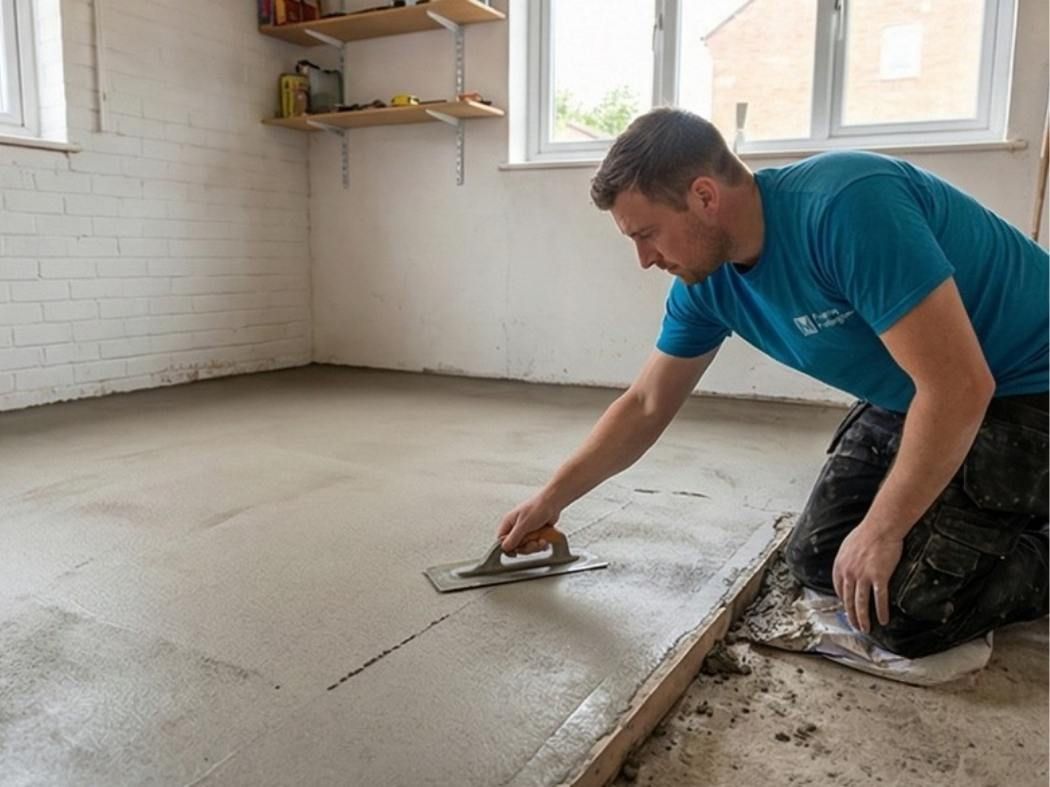
Professional floor screeding transforms these problematic surfaces into level, smooth floors suitable for modern coatings and finishes. The fresh screed layer provides an uncontaminated surface with proper fall for drainage when required, whilst the improved flatness makes the space more pleasant to work in and easier to keep clean. For workshops housing machinery or workbenches, a level floor becomes essential for equipment stability and accurate work.
The loads garages must support differ significantly from domestic rooms. A typical family car weighs 1,200-1,500kg concentrated on four small tyre contact patches, creating substantial point loads on the floor surface. Heavier vehicles like SUVs, vans, or classic cars under restoration can exceed 2,500kg. Workshop machinery adds further loading considerations. These demands mean garage screed specifications must account for compressive strength requirements that far exceed those for standard residential flooring applications.
Surface Preparation and Installation Process
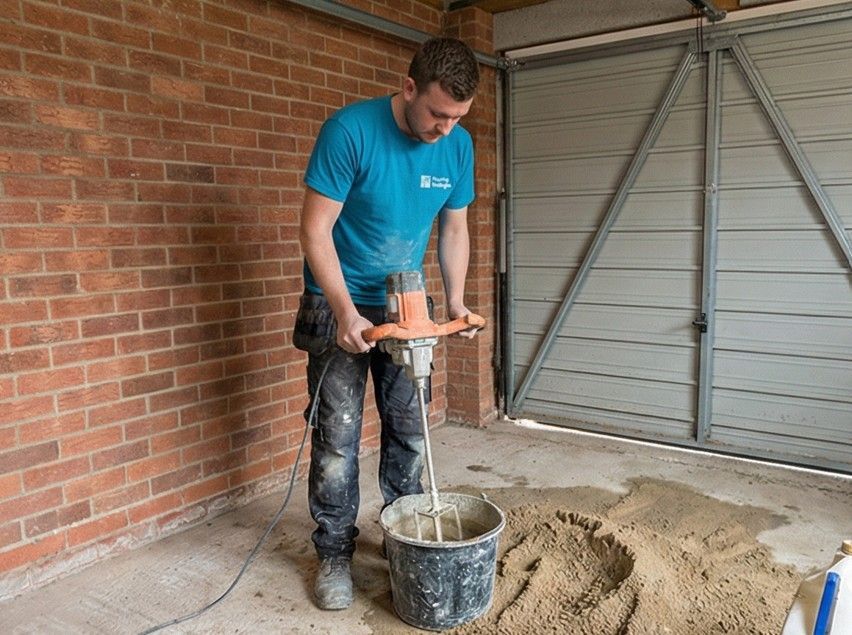
Successful garage floor screeding begins with thorough preparation of the existing concrete substrate. The challenges differ significantly from domestic floor preparation work, as garages often harbour years of oil contamination, surface degradation, and other issues that must be addressed before screeding commences.
Dealing with Contaminated Concrete
Oil, grease, and other automotive fluids penetrate concrete surfaces, creating contamination that prevents proper adhesion between the old slab and new screed. We thoroughly clean the substrate using industrial degreasers and mechanical preparation methods to remove surface contaminants. Heavily soiled areas sometimes require shot blasting or grinding to expose clean concrete capable of bonding with the screed above.
Any loose or flaking concrete must be removed completely. Surface dusting – that chalky powder that comes off garage floors – indicates weak concrete that won't support a bonded screed. We mechanically remove degraded material until reaching sound, solid concrete. Deep cracks or holes get filled with repair mortars before screeding, ensuring the substrate provides uniform support across its entire area.
Priming and Bonding
Clean, prepared concrete receives a primer or bonding agent that creates the connection between old and new materials. We select primers appropriate for garage environments, often specifying products with enhanced moisture tolerance given that garage slabs sometimes suffer from rising damp issues. The primer also helps control suction from porous concrete, preventing it from drawing water from the fresh screed too rapidly and compromising the curing process.
Curing and Protection
Garage screeds cure in challenging conditions compared to heated domestic spaces. Temperature fluctuations, particularly in winter, can affect curing times and final strength. We monitor conditions carefully, sometimes recommending temporary heating during cold weather to maintain appropriate curing temperatures. The screed surface needs protection from traffic during curing – typically 48-72 hours before light foot traffic, with vehicle loading delayed for at least 7 days for liquid screed and 28 days for traditional screed to achieve full strength.
For workshops where downtime must be minimised, rapid-hardening screed formulations can reduce these timescales, though they come at additional cost. We'll discuss these options if your project has tight scheduling requirements.
Professional Garage and Workshop Floor Screeding
Flooring Nottingham provides specialist garage and workshop floor screeding throughout Nottingham, Beeston, West Bridgford, Hucknall, Arnold, Long Eaton, and surrounding areas. Whether you're creating a pristine space for a cherished vehicle collection, setting up a professional workshop, or simply want a durable, easy-to-maintain garage floor, our screeding expertise delivers the robust foundation you need.
Contact us on 0115 647 7207 to discuss your garage floor requirements and arrange a site assessment.
