
Herringbone Flooring Nottingham
Solid wood, engineered oak, laminate and LVT herringbone — supplied and fitted across Nottingham and Nottinghamshire.
Herringbone is the one floor where fitting matters more than the material. The pattern has to be set out from a centre line before a single block goes down, because once it's laid, any error runs the length of the room permanently.

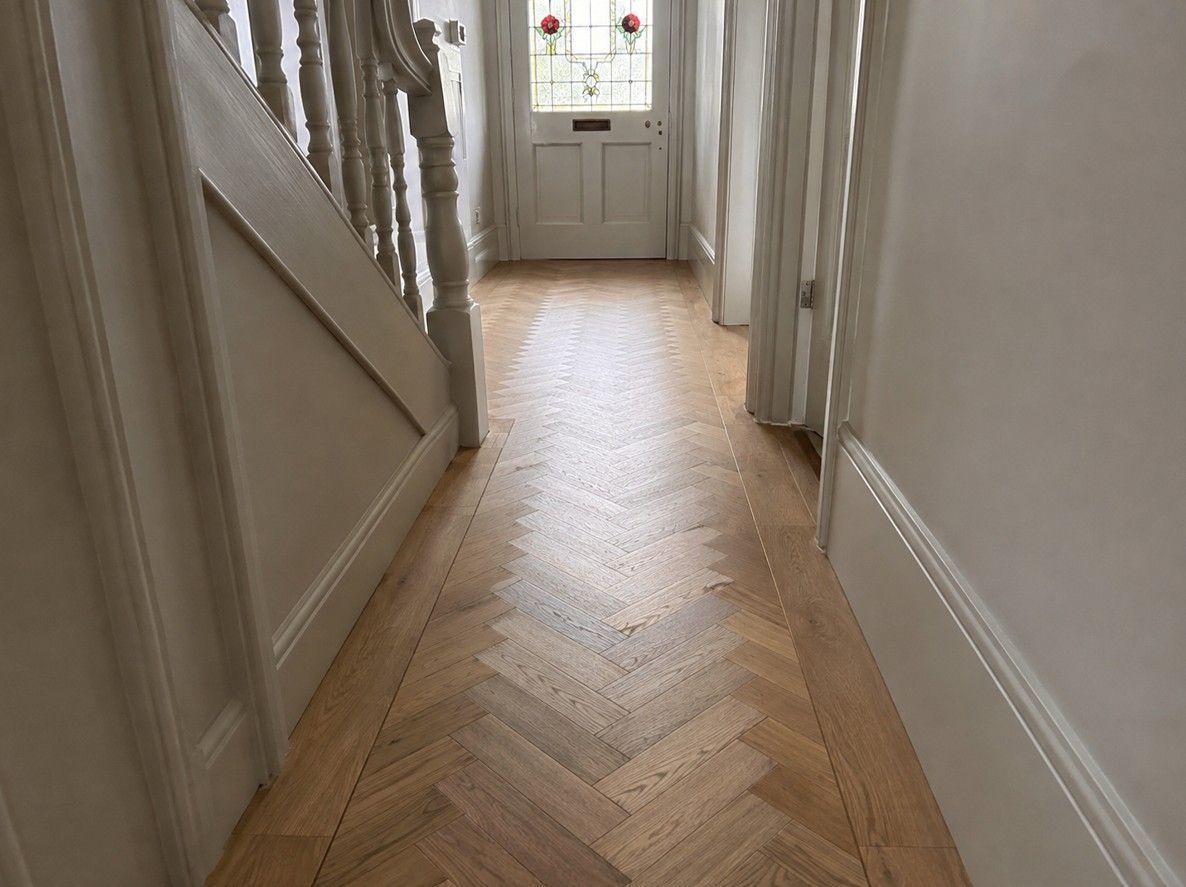
Herringbone Flooring
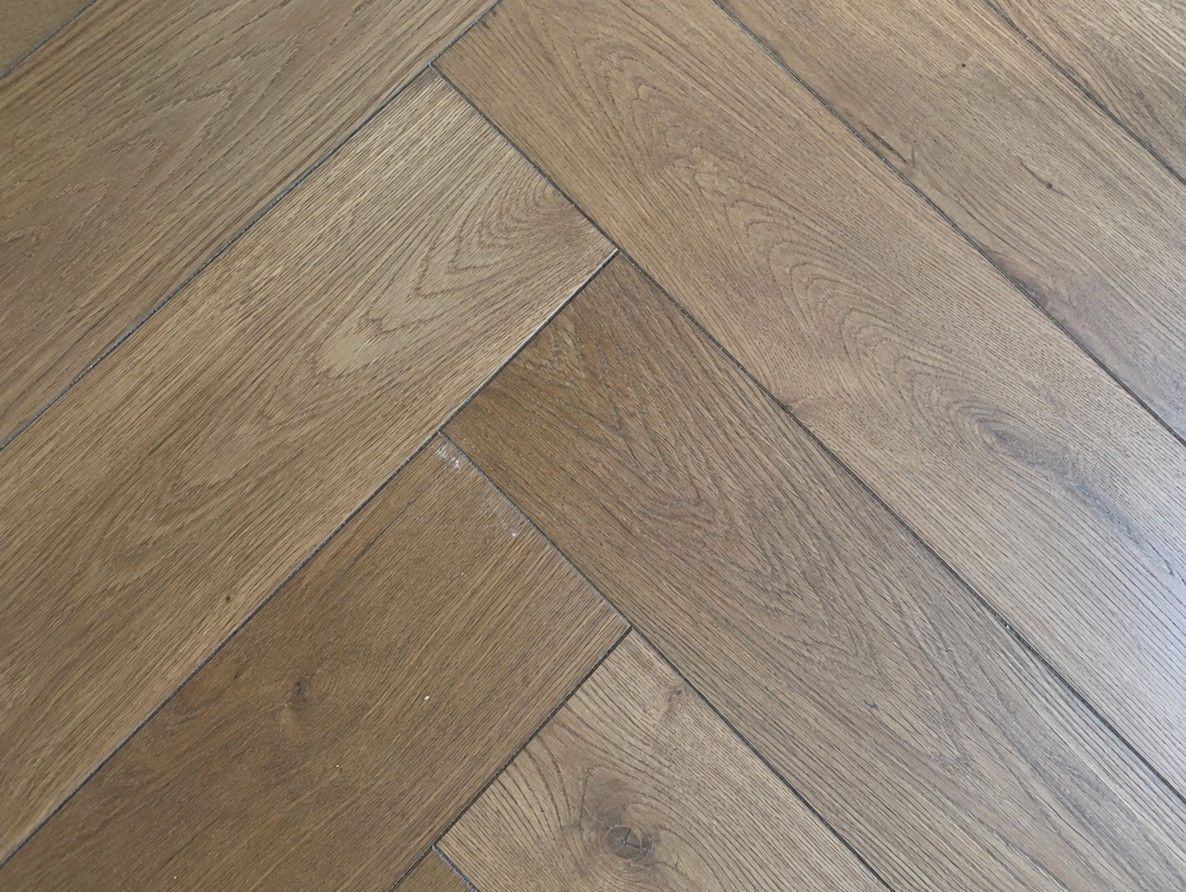
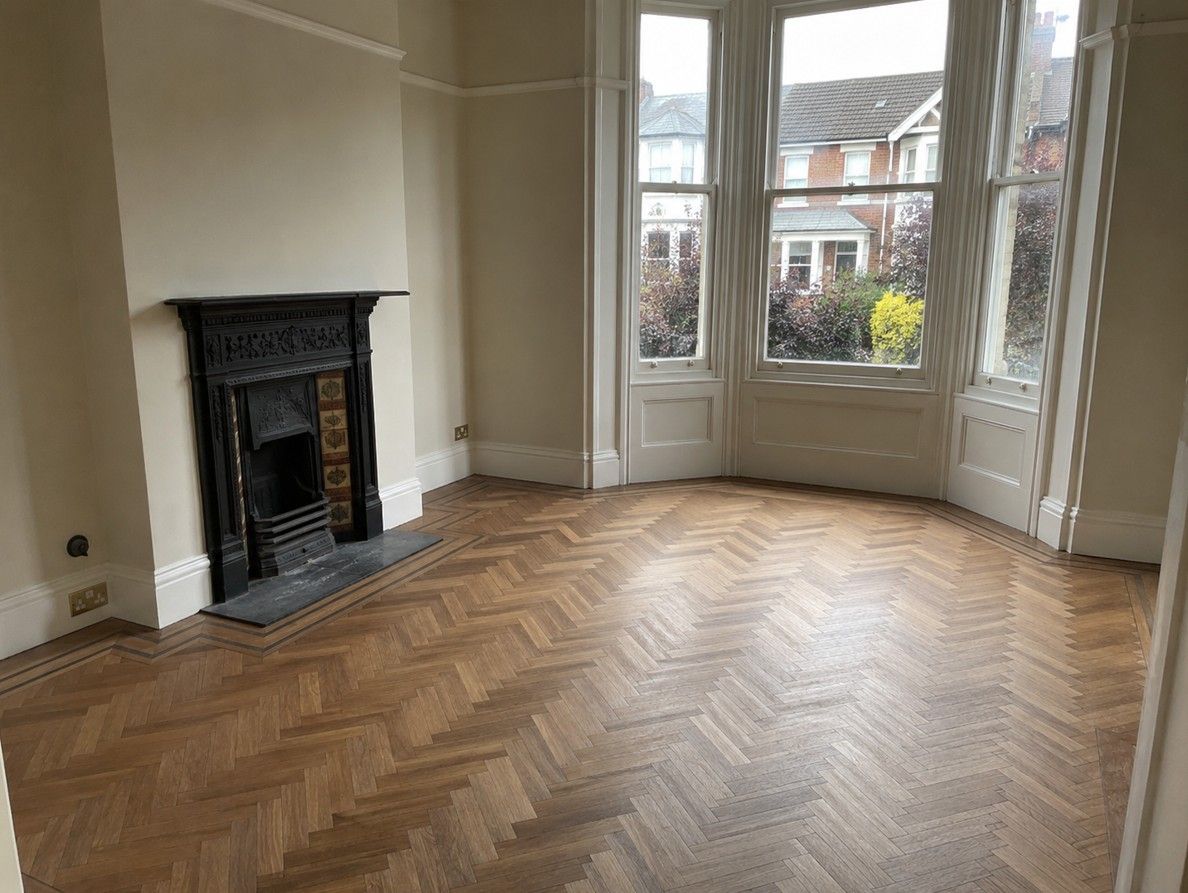
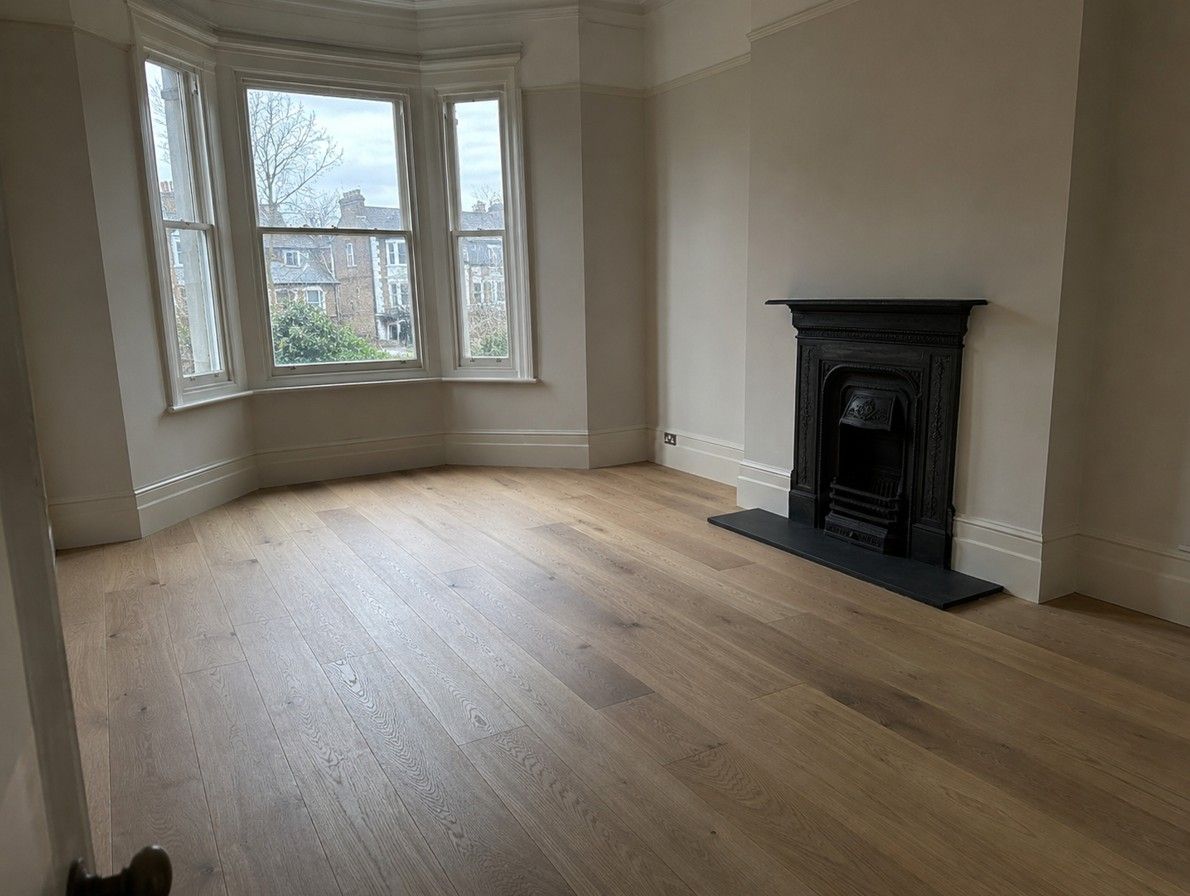
Herringbone Flooring, Supplied and Fitted
We fit herringbone in solid wood, engineered oak, laminate and LVT — and we'll be straight with you about which suits your room, your subfloor and your budget rather than pushing the most expensive option.
Engineered Oak Herringbone
Real hardwood surface on a stable core — the most popular choice
Solid Wood Herringbone
Traditional wood blocks that can be sanded and refinished
LVT Herringbone
Waterproof, warmer underfoot, ideal for kitchens
Laminate Herringbone
The most affordable route to the pattern
Herringbone or Chevron? The Difference Matters
These two get confused constantly, and ordering the wrong one is an expensive mistake. Herringbone uses rectangular blocks with square-cut ends, laid at 90 degrees to one another. The result is a staggered, broken zig-zag where the end of one block meets the side of the next — the pattern most people picture.
Chevron uses blocks cut at an angle, usually 45 or 60 degrees, so the ends meet point-to-point in a continuous, unbroken V running up the room. It's a cleaner, more directional look, and because the blocks are specially mitred it's typically the more expensive of the two.
One is not better than the other — they simply do different things to a room. Herringbone has more texture and movement and suits both period and contemporary interiors. Chevron is sleeker and reads as more formal. If you're unsure, this is exactly the kind of thing worth seeing as a physical sample rather than a photograph, and we'll bring both.
Why Herringbone Costs More to Fit
People are often surprised that two floors made from similar timber can be priced so differently. With herringbone, the labour is usually the larger part of the cost, not the material. Three things drive that.
Setting out. A herringbone floor is laid from a centre line established before the first block goes down, and that line has to relate sensibly to the room — usually running down the length of a hallway, or square to the main sightline as you enter. Get it wrong and the pattern drifts visibly against the walls. This is the step that separates a good herringbone floor from a poor one, and it can't be corrected afterwards.
Wastage. Every block meeting a wall has to be cut at an angle, so herringbone generates noticeably more offcut waste than straight plank flooring. That has to be allowed for in the order, and under-ordering on a herringbone floor is a genuine problem because batch colour variation means a later top-up rarely matches.
Time. Small blocks mean far more individual pieces than a plank floor covering the same area, each one placed, checked and secured. A room that would take a day in plank can take two or three in herringbone.
None of that means it's poor value — it's simply where the money goes. We'd rather explain it upfront than have it look like padding on a quote.
Your Subfloor Matters More Than Usual
Herringbone is the least tolerant floor we lay. Because the blocks are short, any dip or hump in the base shows up as a visible break in the pattern rather than being absorbed across a long plank. A subfloor that would be perfectly acceptable under laminate will often need preparation or levelling before herringbone goes on it.
In Nottingham's Victorian and Edwardian terraces that usually means overboarding a suspended timber floor to create a flat, stable base. In post-war and modern properties with concrete slabs it more often means a levelling compound. Either way, we assess it before quoting so the preparation is priced in from the start rather than raised once the job has begun.
If you're considering underfloor heating underneath, engineered herringbone is the right specification. Solid wood blocks move too much with the heating cycle and are generally not recommended over UFH — a point worth settling before you order rather than after.
Which Material Should You Choose?
Engineered oak is what we fit most. A real hardwood wear layer bonded to a stable plywood core gives you a genuine wood floor that can usually be sanded at least once, copes with underfloor heating, and is far less prone to movement than solid. For most Nottingham homes it's the sensible middle ground.
Solid wood blocks are the traditional article and can be refinished repeatedly, which makes them the choice for period restoration or where an original parquet floor is being matched. They need a stable environment and aren't suited to underfloor heating or rooms with big humidity swings.
LVT herringbone — from ranges such as Amtico, Karndean and Polyflor Colonia — gives you the pattern with full water resistance, which makes it the practical answer for kitchens, utility rooms and anywhere a wood floor would be a risk. It's warmer and quieter underfoot than tile, too.
Laminate herringbone is the most affordable way to the look. Modern versions are considerably more convincing than they once were, though they can't be refinished and won't have the depth of real timber up close.
Where Herringbone Works Best
Hallways are the classic application, and for good reason — the pattern running away from the front door draws the eye down the space and makes a narrow hall feel deliberate rather than cramped. Living rooms, dining rooms and open-plan kitchen-diners all suit it, particularly where you want one floor to visually connect several zones.
There is one honest caveat. In very small rooms the pattern can become busy and lose its effect, because you never see enough of the repeat for the eye to read it properly. In a small cloakroom or box room, a straight plank often looks better. Similarly, in rooms broken up by lots of furniture, kitchen islands or fitted units, much of the pattern ends up hidden — worth thinking about before committing to the extra cost.
Get a Herringbone Flooring Quote
Book a short video call and we'll have a written supply-and-fit quote with you within 24 hours. Or we'll bring herringbone samples to your home so you can see the pattern and tone in your own light. Finance is available subject to status.
Frequently Asked Questions
What's the difference between herringbone and chevron flooring?
Herringbone uses square-cut blocks laid at 90 degrees, creating a staggered zig-zag. Chevron uses angle-cut blocks meeting point to point in a continuous V. Chevron is usually more expensive because the blocks are specially mitred.
Is herringbone flooring more expensive than plank flooring?
Usually yes, and the difference is mostly labour rather than material. Smaller blocks mean more pieces to lay, more cutting at the perimeter and more waste to allow for. A room that takes a day in plank can take two or three in herringbone.
Can herringbone flooring go over underfloor heating?
Engineered wood and LVT herringbone both work well over underfloor heating. Solid wood blocks generally do not, because they move too much with the heating cycle. Tell us at quote stage and we'll specify accordingly.
Does my floor need to be perfectly level for herringbone?
Flatter than for most floors, yes. Short blocks show every dip rather than bridging it as a long plank would. A subfloor that would pass under laminate often needs levelling or overboarding before herringbone. We assess this before quoting.
Can I have herringbone flooring in a kitchen or bathroom?
In a kitchen, yes — though LVT herringbone is the safer choice than wood near sinks and dishwashers. For bathrooms and wet rooms we'd recommend LVT rather than any wood product, because sustained moisture will eventually affect timber.
Will herringbone make my room look bigger or smaller?
Laid along the length of a hallway or room, the pattern draws the eye and adds a sense of movement and space. In very small rooms it can look busy, because you don't see enough of the repeat for the pattern to read properly.
Can herringbone flooring be sanded and refinished?
Solid wood blocks can be sanded repeatedly. Engineered herringbone can usually take at least one sanding depending on the wear layer thickness. Laminate and LVT herringbone cannot be refinished and are replaced when worn.
Can you fit herringbone flooring I've bought myself?
Yes, to exactly the same standard. One word of caution: order generously. Herringbone generates more offcut waste than plank, and topping up later often means a different batch with a slightly different colour.
How long does a herringbone floor take to fit?
Typically two to three times longer than the same area in plank flooring. A hallway might take a day, a large living room two to three. Add time if the subfloor needs levelling or screeding first, as that must cure before fitting.
Do you fit herringbone with a border?
Yes. A single or double border framing the herringbone field is traditional and works particularly well in hallways and period rooms. It adds material and labour, so tell us at quote stage rather than afterwards.
Herringbone Flooring Across Nottingham
We fit herringbone throughout Nottingham and Nottinghamshire, including Arnold, West Bridgford, Daybrook, Sherwood, Mapperley and Beeston. See all the areas we cover, or explore our wider parquet flooring range.
