
Waterproof Flooring Nottingham
Sheet vinyl, luxury vinyl tile, cap-coved safety flooring and slip-rated tile — supplied and fitted for kitchens, bathrooms, utility rooms and wet rooms.
"Waterproof" and "water-resistant" get used interchangeably in flooring, and the difference between them is the difference between a floor that survives a leaking washing machine and one that has to be lifted. We'll tell you plainly which is which.

WATERPROOF Floors
Waterproof Flooring Options
Four routes to a floor that copes with water. Which is right depends on how much water it'll actually see, and how often.
Sheet Vinyl
Seamless and genuinely waterproof — the most reliable on a budget
Luxury Vinyl Tile
Wood and stone looks with full water resistance
Safety Vinyl & Cap Coving
Sealed up the wall — the wet room specification
Porcelain & Ceramic Tile
Waterproof tile with a proper wet slip rating
Waterproof or Water-Resistant? The Difference Costs Money
This is the single most useful thing to understand before you buy, because the words are used loosely and the consequences aren't. Water-resistant means the floor will shrug off splashes and spills if you wipe them up reasonably promptly. Waterproof means standing water won't damage the material at all.
Here's the honest ranking, best to worst:
Sheet vinyl is genuinely waterproof and, crucially, seamless — there are no joints for water to find. It's the most reliable choice there is and also the cheapest, which people find surprising.
Luxury vinyl tile is waterproof as a material. Glued down with properly sealed joints it performs excellently. Click-fit LVT is slightly more vulnerable at the joints, so for a genuinely wet area we'd specify glue-down.
Porcelain and ceramic tile are waterproof, but grout isn't fully — so tiled floors depend on the detailing, the sealing and the substrate beneath rather than the tile itself.
Laminate is where people get caught. Boards sold as "water-resistant" or even "waterproof laminate" will handle splashes, but standing water gets into the core, the board swells, and the damage is permanent and irreversible. A burst washing machine hose will write off a laminate floor.
Solid wood and engineered wood have no business in a genuinely wet area. Engineered copes better than solid, but neither is a waterproof floor and we won't pretend otherwise.
Where Waterproof Flooring Actually Matters
Bathrooms are the obvious one, but they're not the most common reason people call us about this.
Kitchens are the biggest single source of water damage in a house — dishwashers, washing machines and fridge-freezer plumbing all fail eventually, and they tend to do it slowly and out of sight under a unit. A waterproof floor turns a disaster into an inconvenience.
Utility rooms and downstairs cloakrooms concentrate appliances and plumbing into small spaces, often with a back door bringing wet feet in on top.
Conservatories and garden rooms see condensation and traffic straight in from outside, and large temperature swings that timber floors dislike.
Basements and cellars in Nottingham's Victorian housing are a particular case — many have no damp-proof membrane at all, and moisture comes up through the slab rather than down from above. That needs assessing before anything is laid, because a waterproof floor covering over a damp slab traps the moisture rather than solving it.
Wet Room Flooring Nottingham
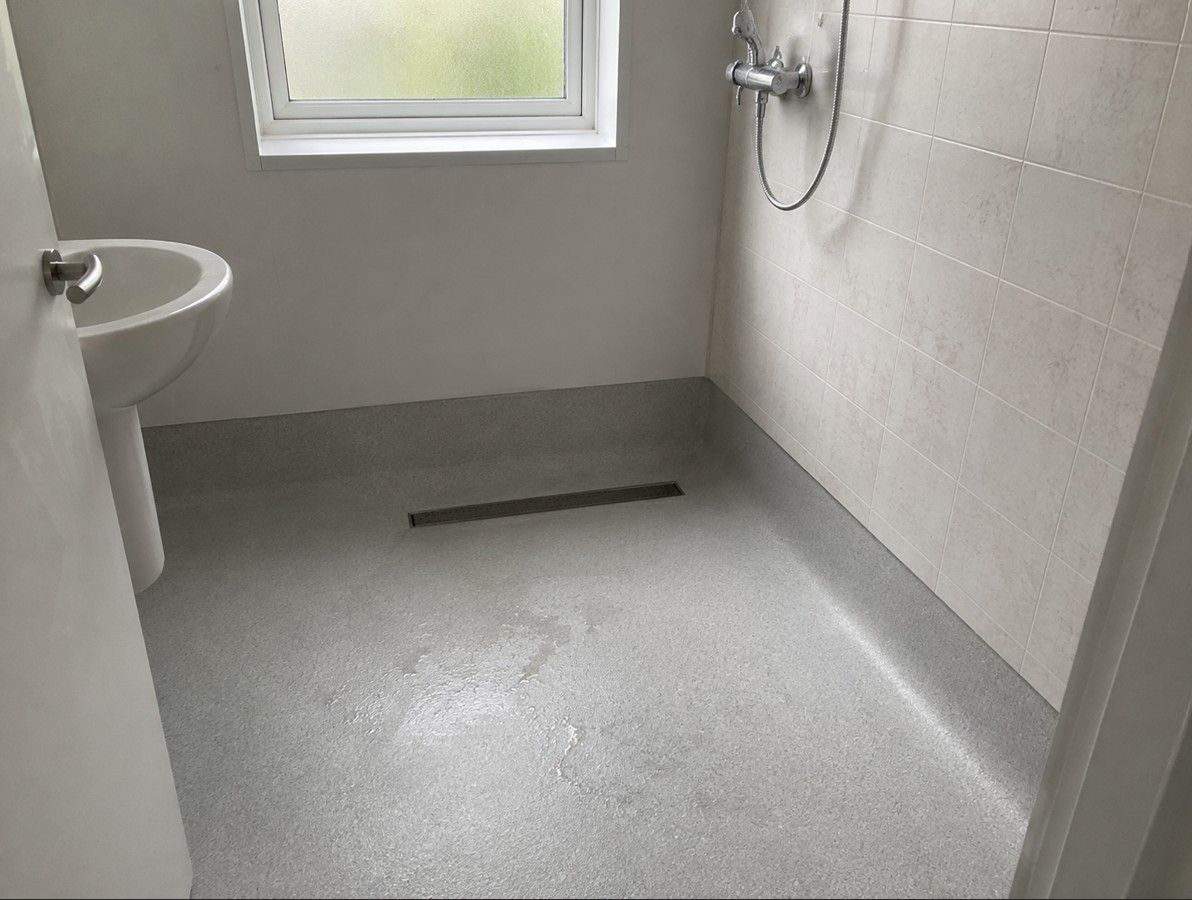
A wet room asks more of a floor than anywhere else in the house. In a normal bathroom, water is contained — it goes in the bath or lands in a shower tray. A wet room has no containment at all: the floor itself is the shower tray.
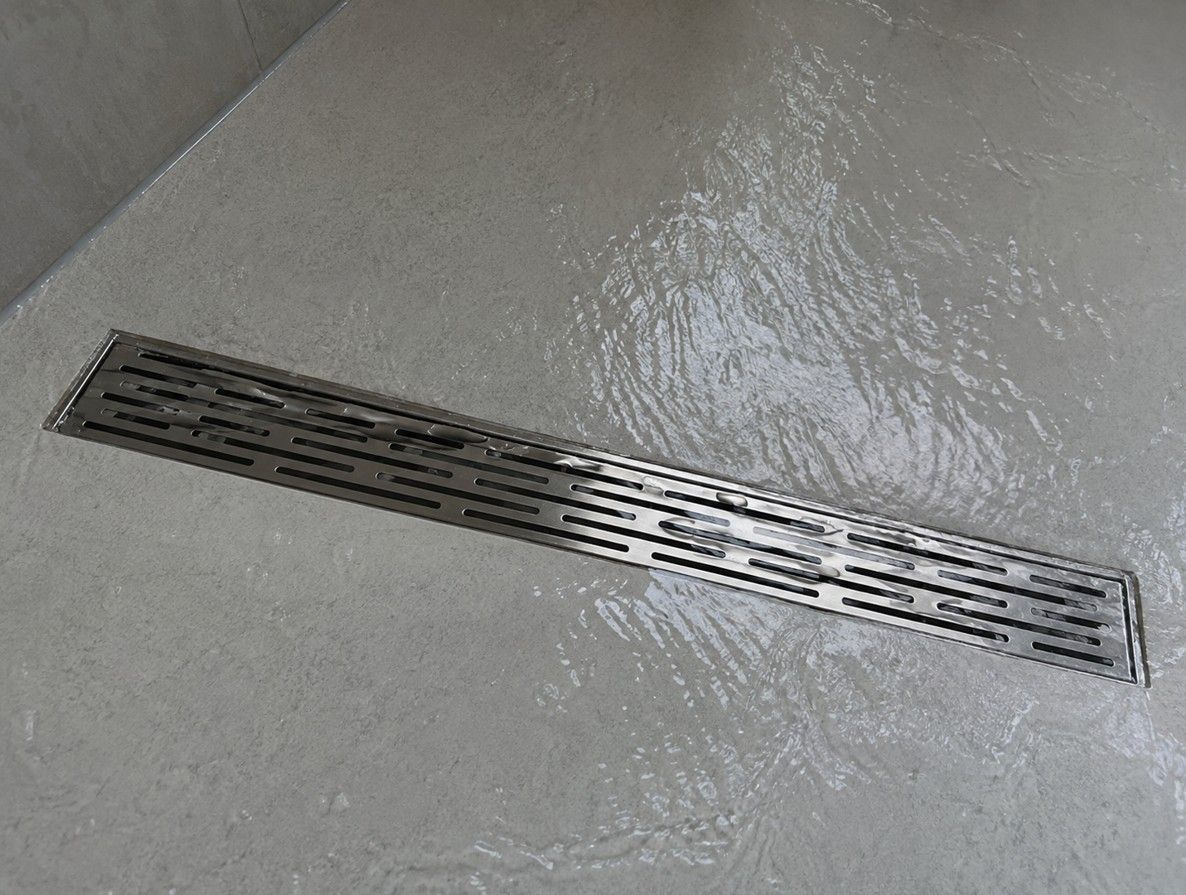
That changes three things. The floor needs a deliberate fall towards the drain so water runs away rather than pooling. The whole area needs tanking — a continuous waterproof membrane across the floor and up the walls, sealed at every corner and pipe penetration, before any flooring goes down. And the surface has to stay safe underfoot when wet.
Tanking is the part nobody ever sees and the part that matters most. Skipped or done badly, water tracks through the substrate and appears as damp in the room below, sometimes months later — and by then the only fix is taking the whole floor up. If a wet room quote doesn't mention waterproofing, ask what's happening about it. That applies to ours as much as anyone's.
The fall matters nearly as much. Too little and water sits in puddles, which is the most common complaint about badly-fitted wet rooms. Too much and the floor feels tilted underfoot, which matters a great deal if the user is unsteady. This is also why screeding and levelling and the floor covering really should be one job — if the person forming the fall isn't the person laying the floor, the gap between them is where wet rooms fail.
Slip Resistance — What the Ratings Mean
"Non-slip" is used loosely, so it's worth knowing what's being measured.
The UK method is the pendulum test(BS 7976), producing a Pendulum Test Value. It's the Health and Safety Executive's preferred method, partly because it can be carried out on a floor that's already laid. The bands are widely used: PTV 36 or above is regarded as low slip risk in wet conditions, 25 to 35 is moderate, and below 24 is high risk. For wet rooms specifically — where the floor is wet by design rather than by accident — PTV 40 or above is commonly advised.
You'll also see R ratings from R9 to R13. Those come from a German ramp test using oil as the contaminant, which suits industrial and commercial kitchen settings better than domestic bathrooms. A product can carry a decent R rating and still perform poorly on a wet pendulum test, so if slip resistance genuinely matters, the PTV is the number to ask for.
To be clear where this applies: slip resistance is a workplace and public building obligation, not a legal requirement in a private home. The guidance is still worth following in a domestic wet room, particularly where the room is for someone elderly or unsteady. We can tell you what rating a given product carries — for a formal specification on commercial or care premises, your own safety adviser or environmental health officer should confirm the requirement.
Accessible Bathrooms and Care Settings
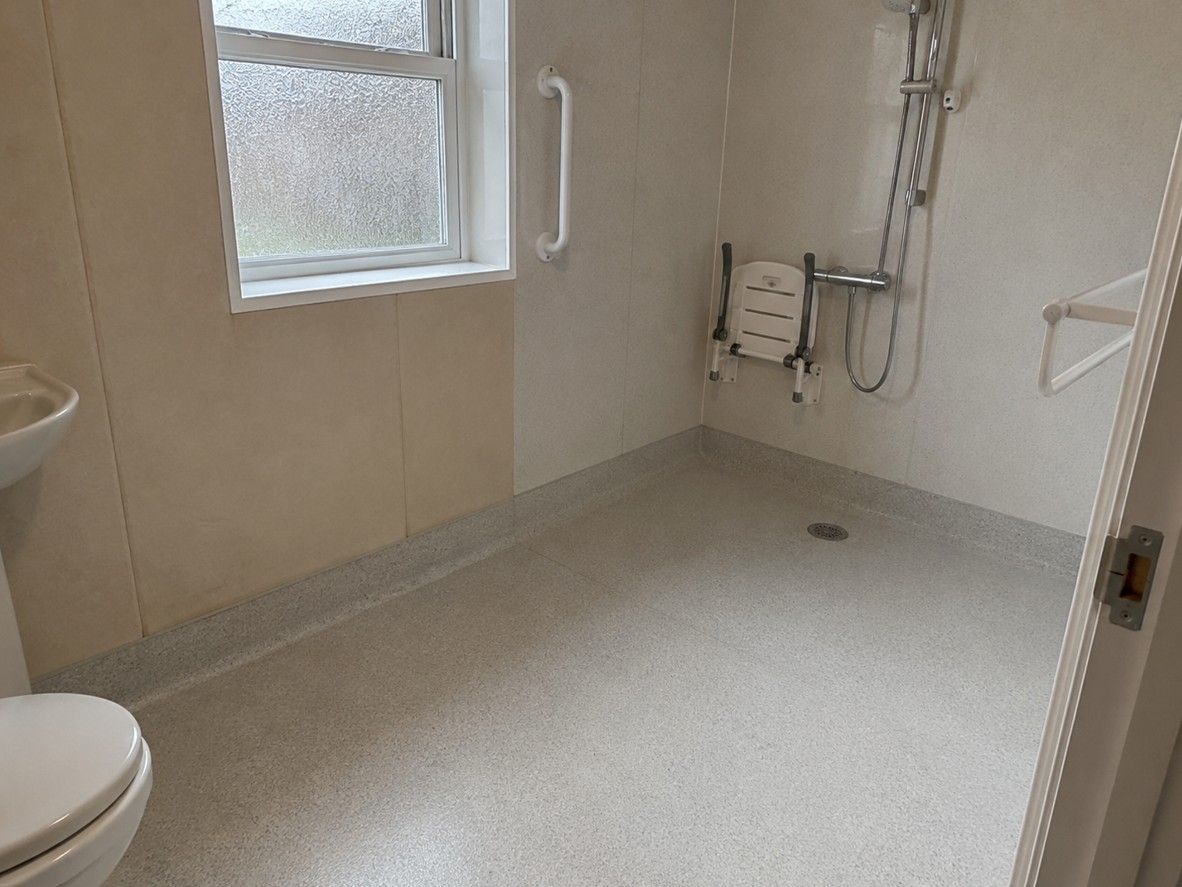
A large share of the wet rooms we fit are accessibility adaptations — a level-access shower for someone who can no longer manage a bath, or work ahead of a discharge from hospital. The priorities change completely.
Slip resistance becomes the first consideration rather than the last. Safety vinyl with cap coving is usually the right answer: a single sheet with the flooring turned up the wall in a continuous curve, so there's no join at skirting level, nowhere for water to get under and no corner for dirt to collect. It's the specification used in hospitals and care homes, and it's easier to clean than any tiled floor. Coving height is a deliberate decision — six to eight inches is typical domestically, considerably higher in healthcare settings. Full detail on our non-slip bathroom flooring page.
If the work forms part of a wider adaptation, it's worth asking your local council whether a Disabled Facilities Grant might contribute. Nottingham City Council and the Gedling, Broxtowe and Rushcliffe borough councils all administer these. Eligibility depends on an assessment and a means test — we fit floors rather than advise on grants, so the council's housing team is the right first call.
Get a Waterproof Flooring Quote
Book a short video call and we'll have a written supply-and-fit quote with you within 24 hours — including any levelling or waterproofing, not just the floor covering. Finance available subject to status.
Frequently Asked Questions
What is the best waterproof flooring?
Sheet vinyl is the most reliable because it's seamless — there are no joints for water to find — and it's also the cheapest. Glued-down LVT is the best-looking genuinely waterproof option, and slip-rated porcelain tile works where detailing is done properly.
Is laminate flooring waterproof?
No. Even boards sold as waterproof or water-resistant laminate will survive splashes but not standing water — the core swells and the damage is permanent. For kitchens, bathrooms and wet rooms, LVT or sheet vinyl is the correct choice.
What's the difference between waterproof and water-resistant flooring?
Water-resistant means splashes and spills are fine if wiped up reasonably promptly. Waterproof means standing water won't damage the material at all. The difference matters most in kitchens, where appliance leaks happen slowly and out of sight.
What flooring is best for a wet room?
Safety vinyl with cap coving is the strongest option — a single sealed sheet with genuine slip resistance, turned up the wall so there's no join at floor level. Waterproof LVT and slip-rated tile are alternatives where appearance matters more.
Does a wet room floor need waterproofing underneath?
Yes. A continuous tanking membrane goes across the floor and up the walls before any flooring is laid, sealed at every corner and pipe. Without it, water tracks through the substrate and shows as damp in the room below.
What does PTV 36 mean?
PTV is the Pendulum Test Value, the UK measure of slip resistance under BS 7976. A wet PTV of 36 or above is regarded as low slip risk. For wet rooms, where the floor is wet by design, 40 or above is commonly advised.
Can I put waterproof flooring in a kitchen?
Yes, and it's arguably where it matters most. Dishwashers, washing machines and fridge plumbing all fail eventually, usually slowly and hidden under a unit. LVT and sheet vinyl both handle it; laminate does not.
Can waterproof flooring go in a cellar or basement?
Often, but the slab needs assessing first. Many Nottingham cellars have no damp-proof membrane, so moisture rises from below. Laying a waterproof covering over a damp slab traps moisture rather than solving it.
Why does my wet room floor hold puddles?
Almost always because the fall to the drain is insufficient or uneven. It's formed with a pre-shaped former or by hand-shaping the screed, and it needs setting before the drain position is fixed rather than corrected afterwards.
Do you do the levelling and waterproofing as well as the floor?
Yes. We handle screeding, levelling, forming the fall and the floor covering as one job. Splitting a wet room between two contractors is where most of them go wrong, because the join between the two is exactly where water gets in.
Waterproof Flooring Across Nottingham
We fit waterproof, bathroom and wet room flooring throughout Nottingham and Nottinghamshire, including Arnold, Daybrook, West Bridgford, Sherwood, Mapperley and Beeston. See all the areas we cover.
